
The Science Behind a Perfectly Sharp Knife
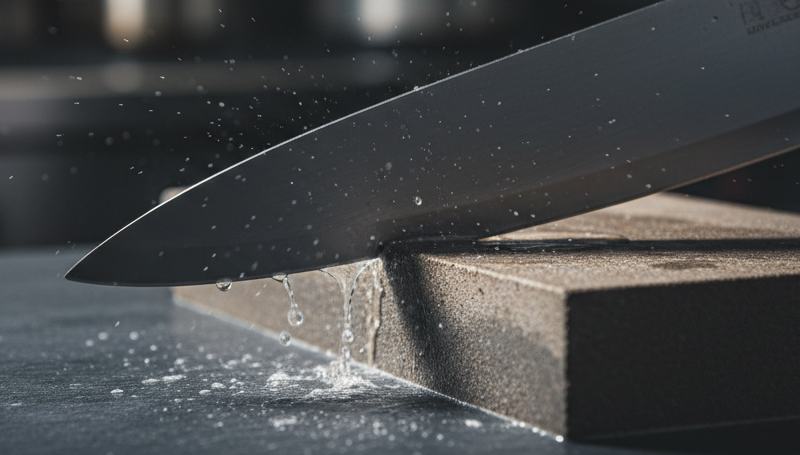

The Science Behind a Perfectly Sharp Knife (And Why It Matters More Than You Think)
There's a moment every cook knows — that frustrating drag as a knife crushes a tomato instead of slicing cleanly through it. It's not just annoying. It's actually dangerous. And it all comes down to science.
What Does "Sharp" Actually Mean?
At its most fundamental level, a sharp knife is one with an extremely thin, refined edge — an apex where two bevels meet at a precise angle. Under a microscope, a dull knife looks like a jagged, rolled, or folded piece of metal. A sharp knife looks like a razor-thin line.
That edge is measured in microns. The difference between a knife that glides and one that struggles is often just a few thousandths of a millimetre.
The Physics of Cutting
When a sharp knife meets food, it concentrates force into an incredibly small area. Pressure = Force ÷ Area. The smaller the area, the greater the pressure — meaning a sharp knife requires far less effort to cut cleanly. A dull knife distributes that force across a wider, irregular edge, causing tearing, crushing, and — because you're pushing harder — a much higher risk of slipping.
This is why professional chefs sharpen their knives constantly. It's not vanity. It's physics.
How Knives Go Dull
Every time a knife contacts a surface — a chopping board, a plate, even food itself — the edge deforms slightly. Steel is hard but not perfectly rigid. Over time, the apex rolls, chips, or folds over. This is called edge deformation, and it's completely normal.
There are two stages of wear:
- Edge rolling — the tip folds over microscopically, often fixable with a honing steel
- Edge degradation — the metal actually wears away or chips, requiring proper sharpening to remove metal and re-establish the bevel
Most home cooks only ever hone their knives (if that), which means the underlying edge geometry is never properly restored. That's where professional sharpening makes all the difference.
The Art and Science of Professional Sharpening
Restoring a knife edge isn't just about running it across a stone. It requires:
Correct angle selection — Different knives are designed for different edge angles. A Japanese chef's knife might be sharpened at 15° per side; a robust Western knife at 20–22°. Getting this wrong means a weaker edge that dulls faster.
Progressive grit refinement — Professional sharpening moves through a sequence of abrasive grits, from coarse (to reshape the bevel) through medium (to refine it) to fine and ultra-fine (to polish the apex to a mirror finish). Each stage removes the scratches left by the last.
Burr formation and removal — As metal is removed on one side, a microscopic burr forms on the other. Knowing when to switch sides, and how to cleanly remove the burr without rolling it, is the hallmark of a skilled sharpener.
Edge finishing — A stropped or leather-finished edge aligns any remaining micro-deformations and gives that final, hair-splitting sharpness.
This is a craft that takes years to master — and the results are immediately, dramatically noticeable.
Why Send Your Knives to the Professionals?
Home sharpening tools — pull-through sharpeners, cheap whetstones, electric gadgets — remove metal aggressively and inconsistently. They can shorten the life of your knives significantly and rarely produce a truly refined edge.
At Knife Sharp, we treat every knife as an individual. We assess the steel, the existing geometry, and the intended use before we sharpen a single stroke. The result is an edge that performs the way your knife was designed to — and lasts far longer between sharpenings.
Whether it's a treasured Japanese gyuto, a well-worn chef's knife, or a full kitchen set that's been neglected for years, we'll bring it back to life.
Ready to feel the difference? Send your knives to us at
Stay Sharp!
Also in The 'Sharp' Blog
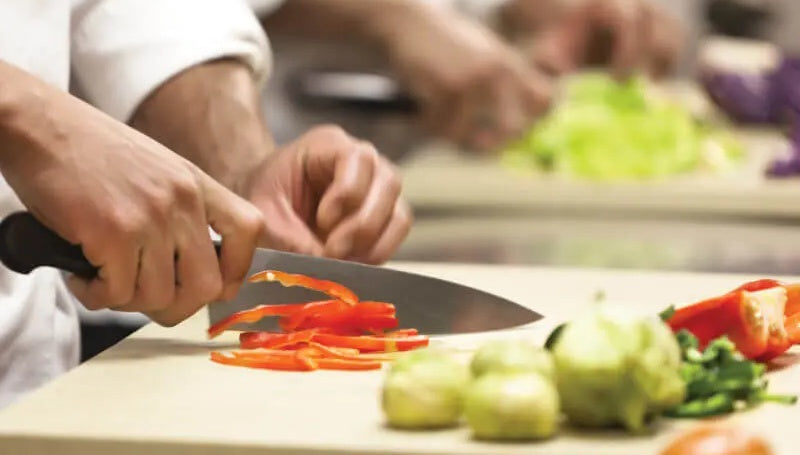

Knife Sharpening for Restaurants and Catering Businesses
Whether you run a busy restaurant, a café, a catering company, or a food production business, the condition of your knives directly affects the speed, safety, and quality of your kitchen. Blunt knives slow your team down...
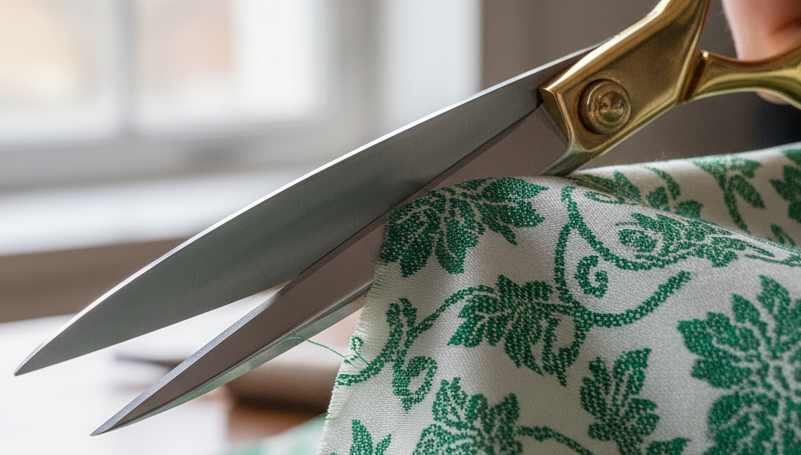

How to Tell If Your Scissors Need Sharpening
Whether you're using kitchen scissors to break down a chicken, dressmaking scissors to cut fabric, or general household scissors around the house, the sharpness of your blades makes a significant difference to the quality and ease of your work...

Stay in the Loop: Now on SMS & WhatsApp
We're always looking for better ways to keep you informed — and now we're making it even easier to stay connected with Knife Sharp. We're excited to announce that we're now using SMS and WhatsApp to keep our customers up to date...